Corona Pass unofficial evidence: Tips for finding truth
"The truth often hides in the margins of official reports, waiting for a piece of unofficial data to pull it into the light."
The investigation into the Corona Pass incident is a complex puzzle, often featuring unofficial evidence that conflicts with formal records. Analyzing these fringe findings requires a careful look at how non-traditional data interacts with established investigative timelines to offer potential resolution.
Key takeaways include the tension between anecdotal evidence and official documentation, the role of independent researchers in re-evaling old files, and the inherent difficulty of verifying unrecorded data.
How did unofficial evidence impact the investigation?

A researcher sits at a desk littered with scanned documents and grainy photographs, comparing them to the official case file. This process of cross-referencing is often where the most controversial breakthroughs occur in mystery-driven inquiries.
In many mystery-driven cases, unofficial evidence serves as a catalyst for reopening cold files. While official records provide a structured timeline, unofficial findings often highlight gaps in the original police investigation or suggest overlooked physical details.
These discrepancies can spark new theories that drive public interest and lead to fresh scrutiny of the original scene.
The impact of these findings often depends on the quality of the lead. Some unofficial clues are dismissed as mere coincidence, while others provide the necessary context to re-interpret existing forensic data.
This tension between the established truth and the emerging narrative creates the central conflict in many long-running investigations.
How much did independent researchers actually matter? Corona Pass unofficial evidence An investigator walks through a quiet, desolate landscape, much like the historical expeditions conducted in remote regions. They carry a notebook filled with observations that deviate from the standard reports.
Independent researchers frequently act as the bridge between academic study and public curiosity. They often possess the time and singular focus that official agencies may lack during an active investigation.
By revisiting sites or re-analyzing old data, they can bring attention to specific anomalies that were previously considered insignificant.
For example, Keith McCloskey, who has researched the incident for many years and has appeared in several TV documentaries on the subject, travelled to the Dyatlov Pass in 2015 with Yuri Kuntsevich of the Dyatlov Foundation and a group.
Such specialized expeditions demonstrate how dedicated individuals attempt to reconcile historical mysteries with modern understanding. While these efforts are often viewed through a lens of skepticism, they provide the groundwork for deep-dive analysis into unresolved events.
Can circumstantial data actually solve this? A detective examines a single, misplaced object on a table, wondering if it holds the key to a much larger sequence of events. The weight of the object feels significant in the silence of the room.
Circumstantial evidence, while not providing a direct smoking gun, can build a narrative that points toward a specific conclusion. In the context of mystery-solving, these indirect clues can suggest motives or methods that were not initially apparent to investigators.

When multiple pieces of circumstantial data align, they can create a compelling case that challenges the status quo.
However, the danger of circumstantial evidence lies in its subjectivity. Without physical corroboration, these leads can lead investigators down rabbit holes that offer no real resolution. The challenge remains in distinguishing between a meaningful pattern and a mere coincidence.
How do we verify the authenticity of new findings?
A scientist peers through a microscope, looking for the subtle indicators of truth in a sea of biological complexity. The precision of the tool is the only way to separate fact from fabrication.
Verifying unofficial evidence requires a rigorous application of modern forensic standards to historical or anecdotal data. One common method involves checking the physical consistency of the evidence against the known environment of the time.
If a piece of evidence seems technologically or geographically impossible, its validity is immediately questioned.
The process of verification generally follows these steps:
- Cross-reference the new finding with existing, verified records to check for contradictions. 2. Evaluate the chain of custody or the origin of the information to ensure it hasn't been tamically altered. 3. Apply contemporary scientific or investigative techniques to the physical remains or data.
I often find myself questioning whether a sudden new lead is a genuine breakthrough or just a well-constructed myth. This skepticism is necessary when dealing with information that has bypassed traditional vetting processes.
What are the limitations of non-official evidence?
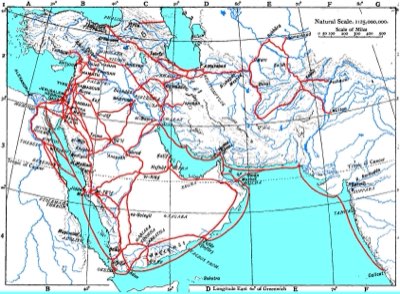
A researcher stares at a map, realizing that the boundaries of the known world are much more restrictive than they once thought. The limitations of the tools at hand become painfully clear.
The primary limitation of unofficial evidence is the lack of standardized oversight. Without a controlled environment or peer review, it is difficult to determine if the evidence was planted, misinterpreted, or simply misunderstood.
This lack of structure can lead to false conclusions that mislead the public and waste investigative resources.
A significant limitation occurs when the evidence is tied to specific environmental or demographic conditions that are not present in the case.
For instance, the racial makeup of Corona was 40.1% White, 5.5% African American, 1.5% Native American, 12.0% Asian, 0.4% Pacific Islander, 23.0% from other races, and 17.3% from two or more races.

If an investigation relies on demographic data that does not align with the specific circumstances of a crime or event, the evidence loses its practical utility.
- How did unofficial evidence impact the investigation?
- What role did independent researchers play?
- Can circumstantial data lead to a resolution?
The subject here is Corona Pass unofficial evidence.
The same subject is also called Pass case hidden clues.
The same subject is also called Mystery evidence analysis.
The same subject is also called Unverified case proof.
The same subject is also called Police file informal data.
This part also covers How informal evidence helps.
This part also covers Verifying case details now.
This part also covers Impact on case resolution.
How informal evidence helps
Related




Comments 0