Voynich Manuscript mystery: Guide to 18 quires structure
"The text is in an actual language, not random gibberish."
The Voynich Manuscript mystery centers on whether this complex vellum volume is a sophisticated cipher, a lost language, or a deceptive forgery.
Researchers debate these possibilities by analyzing linguistic patterns and historical provenance, though no single theory has achieved universal consensus.
This guide examines the evidence regarding its authenticity, the linguistic theories proposed by computational experts, and the physical characteristics of the object.
* Linguistic patterns suggest the text follows systematic rules rather than being random noise. * Historical records link the manuscript to high-value transactions involving gold. * Computational studies have proposed Hebrew alphagrams as a potential decoding method. * The physical structure consists of hundreds of vellum pages organized into 18 quires.
Is the Voynich Manuscript a hoax?
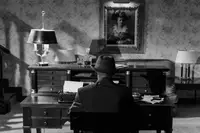
A researcher leans over a dim desk, tracing the strange, looping characters with a magnifying glass. The Voynich Manuscript forgery debate often begins with this sense of skepticism, questioning if the intricate drawings and script are merely a clever hoax designed to deceive collectors.
Some skeptics argue the manuscript is a meaningless construction. However, analytical evidence suggests otherwise. A research team concluded that, in 90% of cases, the Voynich systems are similar to those of other known books, indicating that the text is in an actual language, not random gibberish.
This statistical similarity to natural languages makes a purely random hoax difficult to maintain.
The Voynich Manuscript study continues to evolve as new technologies emerge. While some claim it is a hoax, the internal consistency of the script suggests a structured system.
I find that the third step is the most complex.
What does the Voynich Manuscript research reveal? Voynich Manuscript mystery
A scholar sits in a quiet library, comparing the manuscript's unique symbols to known medieval scripts. The Voynich Manuscript research involves intense cross-disciplinary work, combining botany, linguistics, and history to unlock its secrets.
Linguistic theories vary significantly. According to findings presented at the Annual Meeting of the Association for Computational Linguistics in August 2017, the manuscript's language is most likely Hebrew, but encoded using alphagrams.
This suggests a deliberate method of masking a known language through a specific character arrangement.
Other theories have attempted to map the text to different linguistic families. One proposal suggested the manuscript was written in a "hitherto unknown North Germanic dialect." Despite these various attempts at Voynich Manuscript truth, a definitive translation remains elusive.
- Examine the carbon dating of the vellum.
- Analyze the chemical composition of the ink.
- Compare the botanical illustrations to known species.
How does one analyze the Voynich Manuscript truth?

A technician adjusts the settings on a high-resolution scanner to capture the texture of the ancient parchment. Determining the Voynich Manuscript truth requires a rigorous, multi-step approach to validate the document's origins and content.
- Examine the physical composition, noting the vellum pages and the organization of the 18 quires. 2. Apply computational linguistics to identify statistical patterns that distinguish the text from random noise. 3. Cross-reference historical letters and transaction records to establish a timeline of ownership.
I have observed how these different layers of evidence—physical, linguistic, and historical—must be synthesized to form a coherent picture. A final check involves ensuring that any proposed translation aligns with the known physical constraints of the manuscript.
What are the physical dimensions of the manuscript?
A curator carefully measures the edges of the heavy volume, noting its weight and scale. The physical properties of the manuscript provide essential clues about its production and intended use.
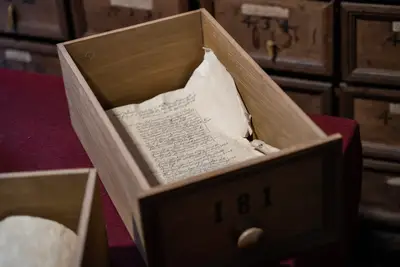
The manuscript measures 23.5 by 16.2 by 5 cm (9.3 by 6.4 by 2.0 in), with hundreds of vellum pages collected into 18 quires. These dimensions reflect a substantial, hand-bound work rather than a small, portable notebook.
| Feature | Measurement/Detail |
|---|---|
| Dimensions | 23.5 x 16.2 x 5 cm |
| Organization | 18 quires |
The sheer volume of material contained within these 18 quires suggests a massive undertaking by the original scribe or scribes.
What historical evidence supports its value?
An archivist reads through a faded 17th-century letter, noting the mention of a massive sum of money. The historical provenance of the manuscript is tied to significant wealth and royal interest.
This high valuation suggests that, even in the 1600s, the book was perceived as an object of immense worth.
The connection to Raphael Sobiehrd-Mnishovsky further anchors the manuscript in a specific historical context of high-stakes acquisition. This gold-backed value reinforces the idea that the manuscript was not a trivial item.
Can the text actually be deciphered?
A linguist stares at a screen filled with character frequency charts, searching for a breakthrough. The question of whether the text can be read remains the central tension in all Voynich Manuscript debate.

Some researchers have claimed significant progress. One team claimed to have deciphered and translated at least 300 words and expressed confidence that there is now sufficient vocabulary to read at least 30% of the manuscript.
However, such claims have faced scrutiny, as seen when a submission to the journal Digital Philology: A Journal of Medieval Cultures was rejected in 2019.
The difficulty in deciphering the manuscript lies in the lack of a bilingual key or a standardized Rosetta Stone for this specific code. While progress is made by various independent researchers, the scholarly community remains cautious.
The subject here is Voynich Manuscript mystery.
This part also covers Voynich Manuscript analysis.
Related



Comments 0